Kosher salt is a coarse, additive-free salt known for its clean flavour and consistent crystal size. It is widely used in cooking because the grains are easy to control, making seasoning more precise than with iodised table salt. Many cooks also prefer it for its pure taste and versatility.
Table of contents
Key Takeaways
- Kosher salt is a coarse, clean-tasting salt with no additives or iodine.
- It is preferred by chefs because the larger crystals provide better control when seasoning.
- Common uses include dry brining, curing, baking and everyday cooking.
- It is valued for its purity rather than specific health benefits.
- Suitable for anyone wanting a simple, natural salt with a mild flavour.
What Makes Kosher Salt Different
Kosher salt stands out because of its texture. The coarse, flaky crystals are much larger than table salt, making it easier to pinch, sprinkle and distribute evenly across food. Despite the name, the salt itself is not automatically kosher. Instead, the term originally referred to its use in koshering meat, a process that required larger, coarse crystals to draw out moisture.
Kosher salt does not contain iodine or anti-caking agents, giving it a neutral taste. If you enjoy exploring natural salts beyond everyday use, you may also want to learn about black salt which offers a unique sulphurous flavour used in vegetarian and South Asian cooking.
How Kosher Salt Is Made
Kosher salt is produced from either underground salt deposits or evaporated seawater. Key steps usually include:
- Extracting brine or mining natural salt rock
- Evaporating or heating the salt
- Forming coarse, irregular flakes
- Avoiding additives or iodine
This minimal processing results in a clean flavour profile and a salt that dissolves at a slower, more controlled rate compared to fine table salt.
Uses for Kosher Salt in Cooking
Seasoning Meat and Poultry
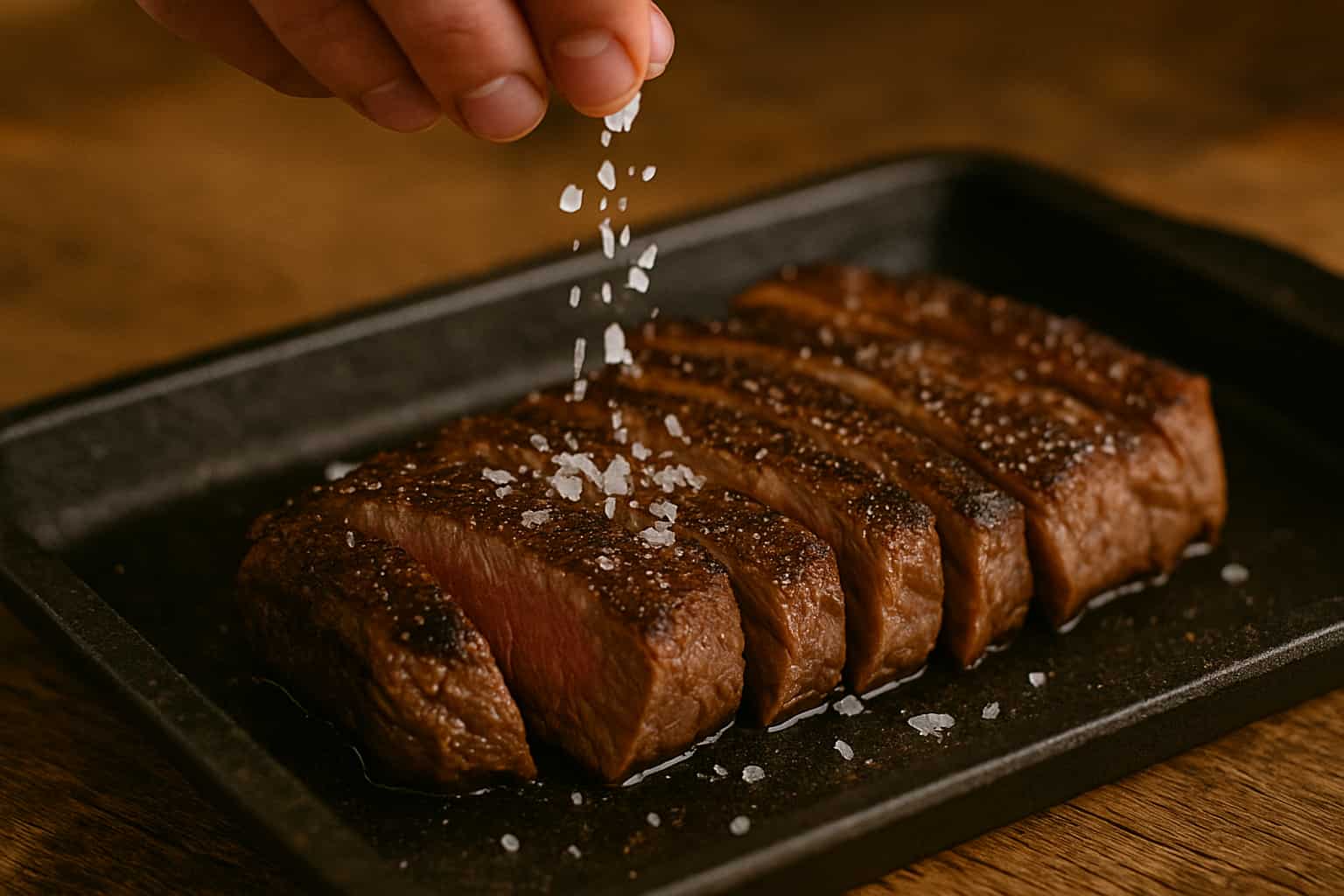
The coarse texture of kosher salt helps it adhere well to the surface of meat. It draws out moisture, enhances browning and improves flavour development. This makes it ideal for steaks, chicken, roasts and barbecue.
For more flavour-focused options, you may also like SafeSalt’s meat rubs which work well alongside kosher salt for marinating and dry brining.
Dry Brining and Curing
Kosher salt is commonly used for dry brining due to its ability to extract moisture and distribute seasoning evenly. It is also suitable for simple curing methods because of its purity and predictable grain size.
Baking and Everyday Cooking
Bakers appreciate the milder, cleaner taste of kosher salt. It disperses more evenly through doughs and batters without the metallic notes some people notice in iodised salt.
It is also popular for:
- Seasoning pasta water
- Roasting vegetables
- Making dressings
- Salting chips or roasted snacks
Finishing Salt
Though not as delicate as flake salt, kosher salt can be used as a finishing touch for savoury dishes. It adds crunch and enhances flavour without overpowering the food.
If you prefer mineral-rich finishing salts, you may enjoy exploring pink Himalayan salt which offers a more complex flavour.
Is Kosher Salt Good for Health
Kosher salt is not promoted as a health product. It is simply a pure form of sodium chloride without additives. Its main advantage is its simplicity, which appeals to people who prefer clean, natural ingredients.
Some people compare kosher salt to more mineral-rich salts when cooking. You can explore mineral differences further in our guide on Celtic vs sea salt when cooking.
As with all salts, moderation is recommended. The coarse texture makes it easier to control how much ends up in a dish, which many people consider a practical benefit.
Kosher Salt vs Other Types of Salt
Kosher Salt vs Table Salt
- Kosher salt is coarse and easier to handle
- Table salt is fine, iodised and dissolves instantly
- Table salt can taste sharper due to additives
Kosher Salt vs Sea Salt
- Both are natural salts
- Sea salt contains trace minerals
- Kosher salt has a cleaner, simpler taste
Kosher Salt vs Himalayan Salt
- Himalayan salt has natural minerals like calcium and magnesium
- Kosher salt is pure sodium chloride with a neutral flavour
- Himalayan salt works well as a finishing salt, while kosher salt is better for cooking
For more detail on flavour and mineral differences, you can read sea salt vs Himalayan salt which compares these two popular choices.
How to Use Kosher Salt Safely
- Start with a smaller amount and increase gradually
- Avoid substituting it one-to-one for fine salt because the crystals are much larger
- Keep it in a dry container to prevent clumping
- Taste as you go to avoid over-seasoning
Want to Learn More or Need Help Choosing a Salt
If you want to explore different salts for cooking, wellness or everyday use, SafeSalt has a wide range of natural options to choose from.
You can learn more about the brand and product range on the About Us page or get in touch if you have any questions.