
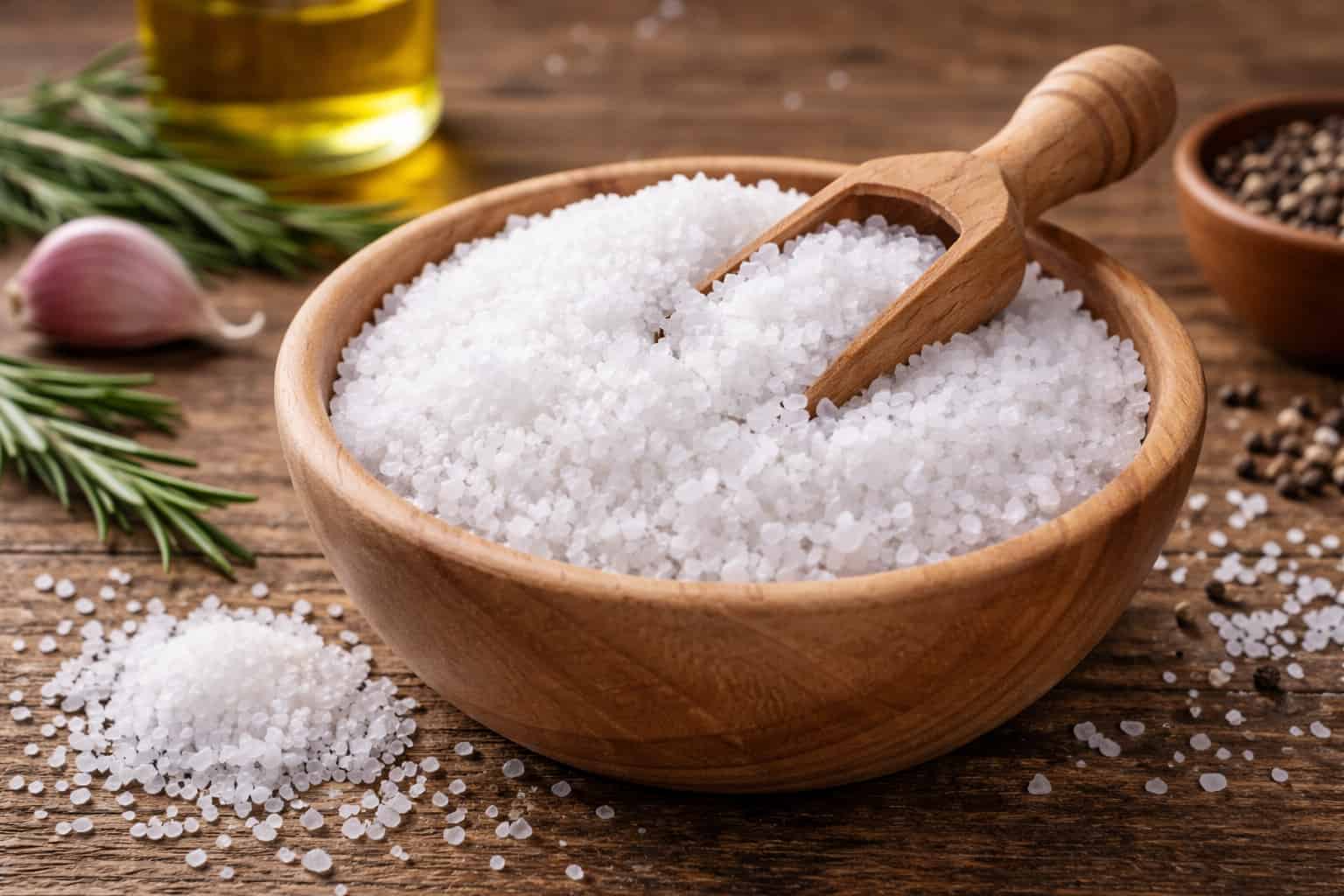
Kosher salt is ideal for everyday cooking because its coarse texture makes it easy to control, distribute evenly and enhance flavour without over-salting. It works especially well for seasoning meat, vegetables and pasta water.
Key takeaways
- Kosher salt is easier to control than table salt
- Its coarse flakes distribute evenly across food
- It is ideal for seasoning meat before cooking
- It dissolves well in pasta water and soups
- It can be used for dry brining and roasting
What Makes Kosher Salt Different in the Kitchen?
Kosher salt has larger, flaky crystals compared to standard table salt. This texture allows better grip when seasoning by hand and more even coverage across food surfaces.
The Kosher Salt available at SafeSalt is free-flowing and suitable for everyday cooking applications.
Because it does not contain additives like anti-caking agents or iodine, many cooks prefer its cleaner taste.
When to Use Kosher Salt While Cooking
Kosher salt is versatile and can be used at multiple stages of cooking.
Seasoning Meat Before Cooking
Sprinkling kosher salt over steak, chicken or lamb before grilling helps draw moisture to the surface and enhances crust formation during cooking.
For deeper flavour development, it can also be used in dry brining techniques.
Salting Pasta Water
Kosher salt dissolves easily in boiling water and distributes evenly. Salting pasta water properly improves flavour from the inside out.
Roasting Vegetables
The coarse flakes cling well to vegetables, ensuring even seasoning during roasting.
Can Kosher Salt Replace Table Salt?
Yes, but measurement adjustments are important.
Because kosher salt crystals are larger and less dense than table salt, one teaspoon of kosher salt does not equal one teaspoon of table salt in saltiness.
If a recipe calls for table salt, you may need slightly more kosher salt to achieve the same flavour level when measuring by volume. If you are measuring by weight, the amount can remain the same.
For a deeper comparison of salt types, this guide on Kosher Salt vs Sea Salt: How to Pick the Right One explains texture and use differences.
How to Use Kosher Salt for Dry Brining
Dry brining involves coating meat with salt and allowing it to rest before cooking. Kosher salt is preferred for this technique because:
- It spreads evenly
- It is less likely to over-salt
- It penetrates gradually
Allow meat to rest in the fridge for several hours or overnight. This method helps improve tenderness and flavour.
If you are exploring different seasoning techniques, this article on How to Use Smoked Salt for Grilling and Marinades explains when to use smoked varieties instead.
Is Kosher Salt Good for Everyday Use?
Yes. Many home cooks use kosher salt as their primary kitchen salt because it provides:
- Better control
- Balanced flavour
- Versatility across recipes
It works equally well in soups, sauces, roasts and simple home cooking.
Elevate Everyday Cooking with the Right Salt
Kosher salt is a reliable and versatile choice for everyday cooking. Its texture, control and flavour profile make it suitable for both simple meals and more advanced techniques like dry brining.To explore SafeSalt’s gourmet salt range, visit our Shop page. To learn more about our philosophy and sourcing, visit our About Us page or contact our team via the Contact Us page.