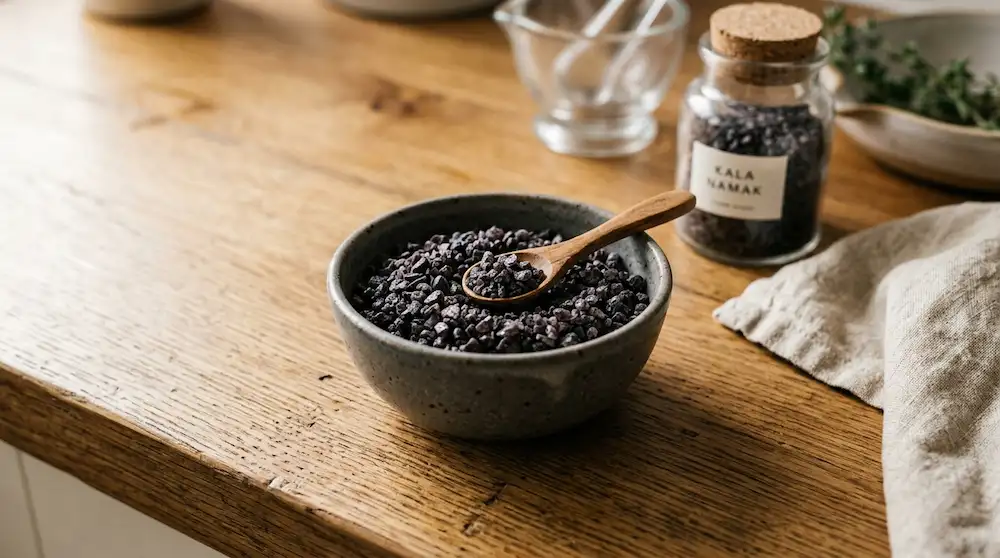
Kala Namak, or Black Salt, stands out for its distinct sulphurous aroma and tangy, savoury taste – a unique flavour that’s both fascinating and deeply rooted in chemistry. But what exactly gives this salt its famous egg-like smell and complex mineral taste?
Table of contents
Key Takeaways
- Kala Namak (Black Salt) gets its dark colour and aroma from natural sulphur compounds formed during processing.
- Its flavour comes from a mix of minerals such as sodium chloride, iron, and traces of hydrogen sulphide.
- Unlike regular salt, it’s prized in Ayurvedic medicine for its digestive and cooling properties.
- You can explore high-quality Himalayan Black Salt (Kala Namak) for cooking, wellness, and natural seasoning.
What Makes Kala Namak (Black Salt) Unique?
Kala Namak, traditionally produced from Himalayan rock salt, undergoes a natural transformation when heated with herbs and seeds such as harad (Terminalia chebula).
During this process, chemical reactions create trace compounds that give the salt its dark purple-brown hue and distinct sulphuric aroma.
Unlike pure table salt, which is almost entirely sodium chloride, Kala Namak contains iron, sulphur, and small amounts of magnesium and potassium, all of which contribute to its unique flavour profile and health value.
The Chemistry Behind the Sulphur Smell
The unmistakable scent of Kala Namak comes from hydrogen sulphide (H₂S), the same gas responsible for the smell of boiled eggs.
When the salt is heated with natural ingredients, trace sulphur compounds form and remain stable even after cooling.
These compounds not only influence aroma but also play a role in its tangy, umami-like taste that enhances savoury dishes, especially vegan and Indian cuisine.
Interestingly, the smell softens when dissolved or cooked, leaving behind a smooth, mineral-rich flavour.
Why Kala Namak Tastes So Different from Regular Salt
Kala Namak is less salty than sea or table salt but offers a complex, almost smoky flavour with subtle earthy notes.
This makes it perfect for flavouring vegan dishes like tofu scrambles or chutneys, where it mimics the taste of eggs without adding animal products.
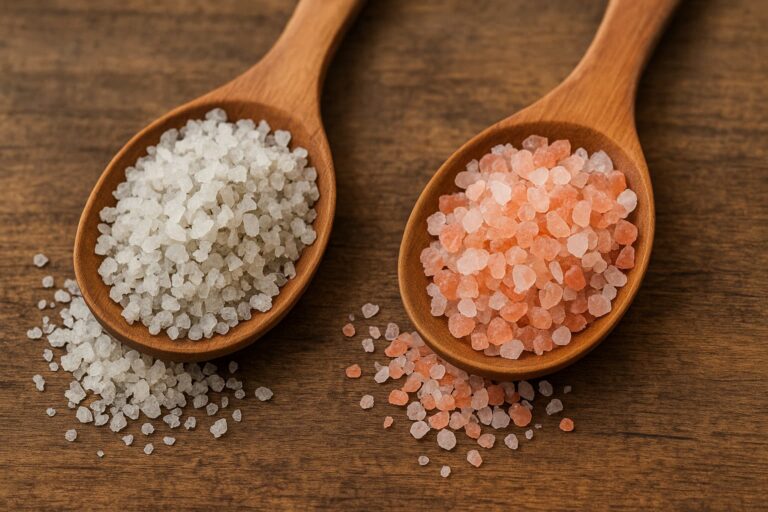
Compared to Sea Salt or Pink Himalayan Salt, black salt’s mineral mix creates a layered taste that’s both sharp and slightly cooling, a rare balance appreciated in both modern and traditional cooking.
The Ayurvedic Connection
In Ayurveda, Kala Namak is valued not just for flavour but for function.
It’s believed to:
- Aid digestion and reduce bloating.
- Balance excess heat in the body (Pitta dosha).
- Stimulate appetite naturally.
Because it’s less processed and rich in trace minerals, it’s often recommended as a healthier alternative to refined salt in traditional wellness practices.
How to Use Kala Namak in Everyday Cooking
A little goes a long way. Kala Namak can be sprinkled on:
- Fruit salads and chutneys for a tangy kick.
- Vegan “egg” dishes for that authentic umami flavour.
- Cooling summer drinks like jaljeera or lemonade.
It also works beautifully in mineral detox routines or as part of natural salt blends alongside Celtic Sea Salt and Smoked Himalayan Salt for added depth.
Final Thoughts
Kala Namak’s unforgettable taste and aroma come down to fascinating natural chemistry – the interplay of minerals, heat, and sulphur compounds that transform simple salt into something extraordinary.
Whether you’re exploring Ayurvedic wellness or elevating your cooking, this naturally mineral-rich salt adds both flavour and function to your pantry.