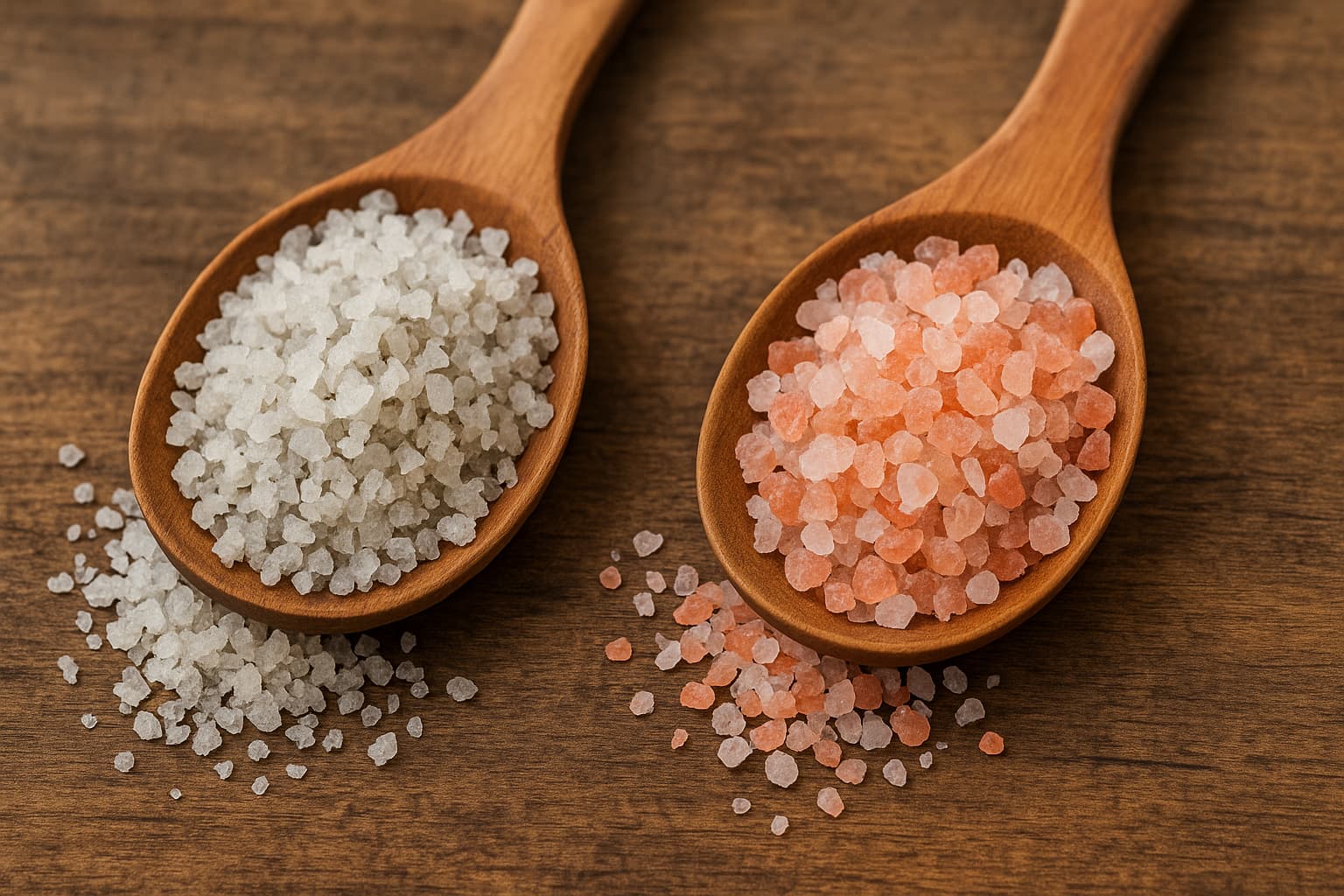
Celtic sea salt and Himalayan pink salt are available in different grain formats. Choose between individual products by the texture, flavour and measurements your recipe needs.
Compare the product descriptions and pack information before substituting one salt for another.
Table of contents
What Is Celtic Salt?
Celtic sea salt is listed in fine and coarse formats. Read the individual product description for its grain characteristics, pack details and any sourcing information you need.
Key characteristics:
- Light grey colour
- Moist texture
- Fine and coarse product formats.
- Check the pack for ingredients and processing information.
Choose coarse Celtic sea salt when the recipe calls for larger grains, or compare the fine version for a finer seasoning format.
You can find both coarse and fine ground versions of Celtic salt available for kitchen use.
What Is Himalayan Salt?
Himalayan pink salt is a rock salt sold in different grain sizes. Check the individual product listing for its grain format and pack details.
Key characteristics:
- Pink to light orange colour
- Dry and granular texture
- Balanced, slightly earthy flavour
- Choose cooking, bath and decorative products separately according to their labels.
Browse the Himalayan pink salt range for the current cooking products and pack options.
Grain formats and recipe use
Compare the format you need for the recipe rather than a general mineral ranking.
| Cooking detail | Celtic sea salt | Himalayan pink salt |
| Fine format | Check the fine product listing | Check the fine product listing |
| Coarse format | Check the coarse product listing | Check the coarse product listing |
| Recipe measurement | Use the specified grain or weight | Use the specified grain or weight |
| Product information | Read the individual pack | Read the individual pack |
If a recipe gives a weight, follow that measurement. Equal spoonfuls of different grain sizes may not contain the same amount of salt.
Taste & Cooking Use
- Celtic salt: Moist, soft, and dissolves quickly. Works well as a finishing salt or for seafood dishes.
- Himalayan salt: Crunchier texture and slightly earthy flavour. Ideal for cooking, roasting, and grinding fresh.
Read the label for ingredients and nutrition information. Check for iodised wording if added iodine is a requirement; do not infer it from the salt’s colour or name.
Uses Beyond the Kitchen
Salt decor and bath products are separate purchases with their own intended uses. Choose each by the product label and supplied instructions.
Himalayan salt is used in:
- Salt lamps for decorative lighting.
- Separately labelled bath salts for bath or foot-soak use.
- Tequila shot glasses, Salt bowls, grinders, and culinary blocks
For the kitchen, use a product labelled for food preparation and choose the grain format your recipe calls for.
Which salt suits your recipe?
It depends on your needs.
Choose Celtic salt if you:
- Prefer a moist, oceanic flavour
- Want a fine or coarse format that matches the recipe.
- Are mostly using it as a finishing or gourmet salt
Choose Himalayan salt if you:
- Want a dry cooking-salt format; check the particular product description.
- Prefer the appearance and texture of the listed pink salt.
- Need a labelled cooking product for the preparation you are making.
Still undecided? You can try both in small quantities and compare them side-by-side, you might find they serve different purposes in your daily routine.
Key Takeaways
- Compare the individual Celtic and Himalayan salt products by their labels and grain formats.
- Fine and coarse salts behave differently in recipes and measurements.
- Choose bath products and salt decor separately from cooking salt.
- Your choice depends on the recipe, flavour preference and intended use.
Looking to explore both? Browse SafeSalt’s Celtic salt collection and Himalayan salt products to get started.
For questions about sourcing, quality, or best uses, you’re welcome to contact our team.